
12 December 2025
Tracing Craftsmanship, Heritage, and Innovation: What PINTU Learned from Paris’ Creative Ecosystem
Highlight
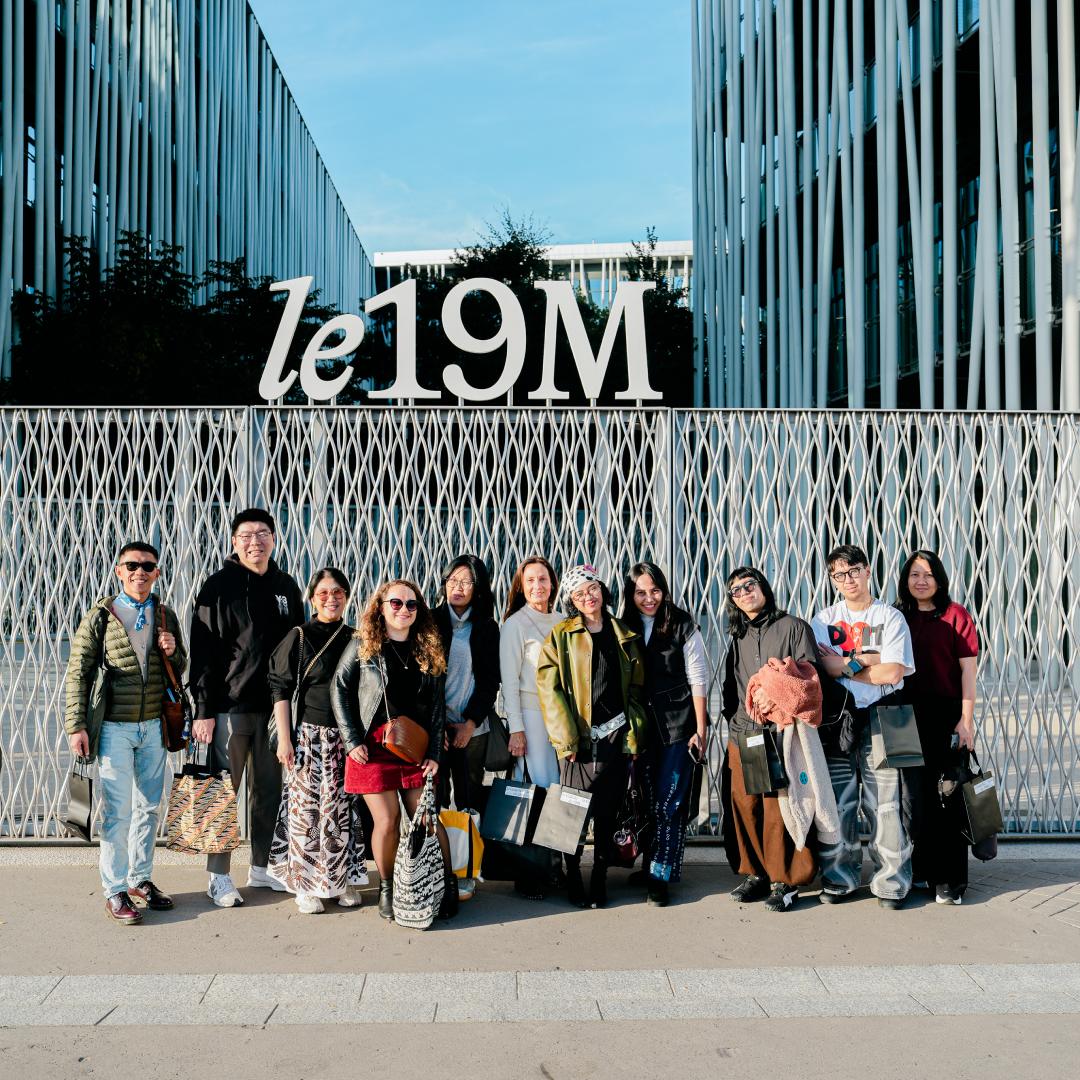
Paris is often associated with runways and trade halls, but during PINTU’s Focus Week, the city revealed a deeper creative infrastructure, one built on craftsmanship, heritage, and long-term innovation. Beyond the Paris Trade Show, PINTU brought its designers and Indonesian journalists into three of the city’s most influential creative spaces: Le19M, home to Chanel’s artisans; Galerie des Ateliers de Paris, a public design incubator; and the Paul Poiret archives at the Musée des Arts Décoratifs (MAD). Together, these visits formed a living continuum that mirrors PINTU’s mission as a Fashion Incubator—where tradition is preserved, talent is nurtured, and sustainability is approached as a cultural responsibility.
Le19M: Craftsmanship as a Living Ecosystem

At Le19M, the home of Chanel’s celebrated artisans, craftsmanship is not treated as a relic of the past but as an evolving force. This architectural landmark brings together embroiderers, feather makers, pleaters, bootmakers, and milliners under one roof, creating an ecosystem designed to safeguard the future of artisanal mastery. According to Sup de Luxe, Le19M was conceived not only as a place of production, but as a long-term commitment to sustaining and transmitting savoir-faire across generations within a contemporary creative framework. As Bruno Pavlovsky emphasized, “The 19M is an ambitious project… Our goal is to ensure that this exceptional heritage of crafts continues and develops.”
This philosophy resonates deeply with PINTU’s approach. Nurturing skill is not merely about preservation, but about ensuring its relevance in the next era of global fashion—where tradition must dialogue with innovation, and artisanship must adapt without losing its soul.
Ateliers de Paris: Where Talent Finds Structure and Direction

From heritage craftsmanship, the journey moved toward structure and future building at Ateliers de Paris. As a public design incubator, the institution supports emerging designers, artisans, and creative businesses as they navigate artistic identity, market realities, and sustainable practice. Its director, Françoise Seince, describes the incubator as “a gateway to a rich ecosystem.”
For PINTU, this ecosystem echoed the core principles of its own Incubator Program: that creativity flourishes when paired with mentorship, resources, and long-term guidance. Ateliers de Paris illustrated how incubation is not merely about acceleration, but about building resilience, equipping creative talents to survive, adapt, and grow within the global Fashion Business landscape.
Paul Poiret at MAD: History as a Compass for Innovation

The final visit to the Paul Poiret archives at MAD added historical depth to the Focus Week narrative. Often regarded as one of the architects of modern fashion, Poiret believed that design must move in dialogue with art, culture, and social change. As noted in features and archival highlights published on fhcm.paris, Poiret viewed fashion as a cultural force-shaped by artistic exchange, performance, and the evolving needs of society, “It was by inspiring artists, designing costumes for plays, embracing new needs… that I served the public of my time,” underscored a timeless truth: fashion evolves when it responds to its era.
For PINTU, Poiret’s legacy reframed heritage not as nostalgia, but as a compass for innovation. History, when understood deeply, becomes a foundation from which new interpretations emerge.
Seen together, these three spaces revealed a coherent philosophy. Le19M shows that craftsmanship survives when treated as a living ecosystem. Ateliers de Paris proves that talent matures through structured incubation and collective support. Paul Poiret’s archives remind us that heritage gains relevance when reinterpreted with contemporary awareness. This continuum reflects the values PINTU seeks to instill within the Indonesian fashion incubator ecosystem, where artisanship, cultural identity, and sustainability are inseparable.
For Indonesia’s creative economy, the lessons from Paris are both instructive and affirming. Craft must be regenerated, not merely preserved. Heritage must be activated, not archived. Sustainability must be rooted in culture, not trend cycles. Through Focus Week Paris, PINTU strengthens its commitment to building programs that connect global references with Indonesia’s unique design language, preparing emerging creators to participate confidently in international fashion dialogues.
As PINTU continues to shape its Residency Program and global collaborations, one conviction stands firm: the future of fashion belongs to those who understand where they come from, how they evolve, and why their work matters.
Join a program that honors heritage while driving innovation.